
If you’re dealing with low energy, low drive, and a body that isn’t responding to your training, you’ve probably seen the ads. TRT clinics promise to get your testosterone up fast. Functional medicine clinics promise to dig deeper with lab testing and supplements. Both have their place, and both have real limits.
My practice falls somewhere different. Like functional medicine, I look for the root cause. The difference is where I look and how I treat it. Here’s a straight comparison of all three so you can decide what fits you.
How a TRT Clinic Works
Most TRT clinics follow a similar model. You fill out a symptom questionnaire, get a blood test (often just total testosterone), and if your numbers are low or borderline, you’re prescribed testosterone as injections, creams, or pellets. Some clinics also add medications to manage side effects, like estrogen blockers. Treatment usually comes with an ongoing membership and regular lab checks.
What it does well: It’s fast and convenient. If your testosterone is truly low, you’ll probably feel a difference quickly.
Where it falls short:
- It can shut down sperm production. When you take testosterone, your body stops making its own, and sperm production drops with it. That’s why fertility researchers recommend that men who want kids avoid it.
- It treats the number, not the cause. If poor sleep, stress, extra body fat, or a nutrient deficiency is driving your low T, those problems are still there.
- It needs monitoring. Testosterone raises red blood cell production, which can thicken your blood. More on this in my post on TRT side effects.
- It’s often a long-term commitment. Once your body stops making its own testosterone, coming off isn’t always simple.
Not every clinic is careful about who gets treated, either. In one secret shopper study, a researcher posed as a 34-year-old man with low energy who wanted to have kids in the future. Even though his testosterone was normal, 6 of the 7 online testosterone companies he tried offered him testosterone anyway, and only 1 asked about his fertility goals.
How a Typical Functional Medicine Clinic Works
Functional medicine is built on a good idea: look at the whole body and find the root cause instead of just treating symptoms. That’s my goal too.
In practice, many functional medicine clinics look for that cause almost entirely through lab testing. It’s common to see comprehensive blood work, stool tests, hormone panels, food sensitivity tests, and more before treatment even starts. The results are then used to build a supplement protocol, often a standard one for your condition, along with diet and lifestyle changes. Many visits are consultations or telehealth, with little or no hands-on care.
What it does well: It’s thorough, it looks at the big picture, and it gives you a lot of data.
Where it falls short:
- Lab costs add up fast, and much of it often isn’t covered by insurance.
- Protocols can mean long supplement lists. When a plan is built for a condition instead of a person, you can end up taking things your body doesn’t actually need.
- Labs are a snapshot. They show what your levels were on one day, not always what’s driving the problem.
- Physical causes get missed. Old injuries, fascial adhesions, and muscle imbalances don’t show up on a lab test, but in my experience they’re often part of the problem.
Some functional medicine practices do include hands-on care, so it’s worth asking how a clinic works before you book.
How My Approach Is Different
I think of my practice as functional medicine with a few key differences.
Fewer, more targeted labs. I don’t run a big panel on everyone. When testing will answer a specific question, like a salivary hormone panel to see your free testosterone, I’ll use it. Otherwise, a thorough history and exam tell me a lot.
Specific instead of a protocol. This is the biggest difference. Instead of giving every guy with low T the same supplement stack, I use Applied Kinesiology muscle testing, along with your history, exam, and any lab work, to narrow down which specific nutrients or herbs your body needs. In my experience, that means fewer supplements and less trial and error at home. The trial and error happens in the office. On average, patients leave their first visit with two supplements or fewer, and sometimes none.
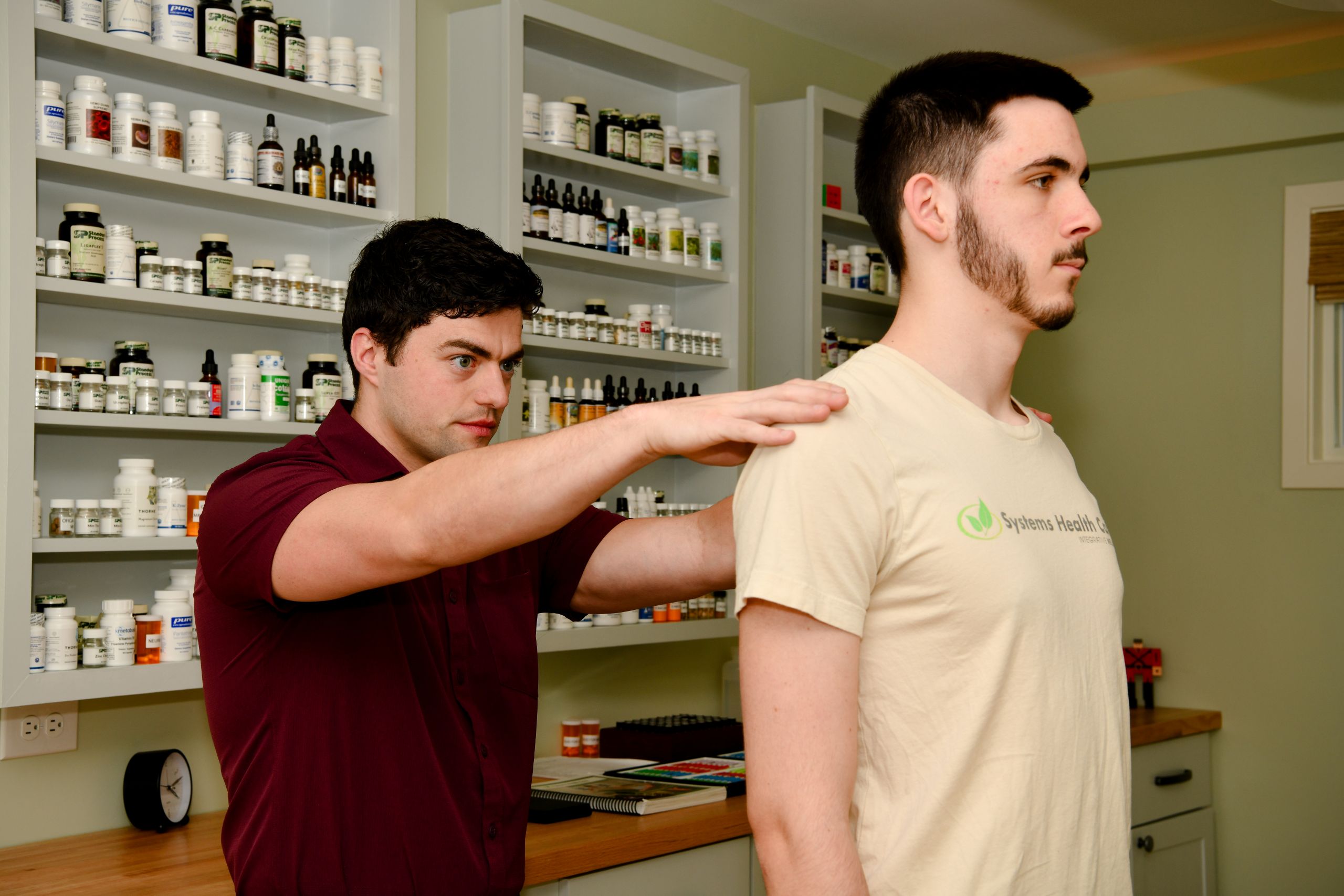
Hands-on treatment for physical causes. Every visit includes hands-on care to address old injuries, fascial adhesions, and muscle imbalances. Depending on what you need, that can include myofascial and trigger point therapy, acupressure, cranial therapy, and specific exercises. This matters for guys who train hard, because nagging injuries are often part of the same picture.
A system for deciding what comes first. I use Systems Health Care, an advanced Applied Kinesiology technique, to figure out which problem to address first. Low testosterone is often the result of something else, like stress, poor sleep, gut issues, or blood sugar problems. Treating things in the right order makes a big difference.
Time. Your first visit is two hours. That’s enough time for a full history, exam, and treatment on the same day, rather than a quick consult and a prescription.
My background is in exercise science and strength and conditioning, so performance in the gym and in your sport is always part of the plan. You can read more about my training here.
Side-by-Side Comparison
| TRT Clinic | Lab-Based Functional Medicine | My Approach | |
|---|---|---|---|
| Main goal | Raise your testosterone level | Find root causes through lab testing | Find the physical and nutritional causes and fix them |
| Testing | Blood test, often just total testosterone | Extensive lab panels | Targeted testing, like a salivary hormone panel, only when needed |
| Treatment | Testosterone, sometimes with added medications | Supplement protocols, often several products, and sometimes prescriptions, including hormones | Usually 2 or fewer specific nutrients or herbs, plus diet, lifestyle, and exercise |
| Physical causes (old injuries, adhesions) | Not addressed | Rarely addressed | Treated hands-on every visit |
| Risk to fertility | Can shut down sperm production | Low, unless testosterone is prescribed | None, no hormones prescribed |
| Long-term plan | Ongoing, often for life | Varies, often months of supplements | Your body making its own testosterone again |
Which Option Is Right for You?
A TRT clinic may make sense if you have a medical cause that natural care can’t fix, like damage to the testicles or a tumor affecting hormone production, or if you’ve truly addressed the root causes and your levels are still very low. If you go this route, find a provider who checks your levels properly and talks with you about fertility before you start.
A lab-based functional medicine clinic may fit if you want as much lab data as possible and prefer telehealth visits.
My approach is a good fit if you want to know why your testosterone is low, you’d rather not be on medication for life, you want to protect your fertility, or you’re an active guy dealing with nagging injuries on top of low energy and drive.
The Bottom Line
TRT raises the number. Functional medicine looks for the cause, mostly through labs and supplements. My goal is to find the specific thing holding your testosterone down, whether it’s physical or nutritional, treat it directly with as few supplements as possible, and get your body making its own testosterone again. If you’re not sure which route is right for you, a quick conversation can help you figure it out.
Want the Full Picture?
This is one piece of a bigger approach to testosterone, energy, and performance. See how it all fits together, and what natural options look like before you consider TRT.
Or book a free 15-minute consult with Dr. Watts.













Leave a Reply
You must be logged in to post a comment.