At my Chapel Hill, NC office, I use Applied Kinesiology (AK) to figure out why your body isn’t working the way it should, whether that’s nagging pain, gut issues, low energy, hormone problems, or a plateau in the gym. Instead of guessing, AK muscle testing helps me narrow down what’s driving your symptoms and which treatment your body actually responds to.
What is Applied Kinesiology?
Applied Kinesiology or AK is a diagnostic technique that follows the understanding that the body is highly interconnected with all its systems and creates well-being through the balance of structural, chemical, and mental health. This concept known as the triad of health sees that these 3 aspects of health cannot be detached from each other and changes on one side of the triangle affect the other 2 sides. This is not a new concept to chiropractic as the founder of chiropractic D.D. Palmer often taught the 3 T’s (thoughts, traumas, and toxins) were the cause of dis-ease.
Applied Kinesiologists are typically chiropractors, but anyone licensed to diagnose can use this technique. Around the world it is commonly used by medical doctors, dentists, acupuncturists, and even psychiatrists.
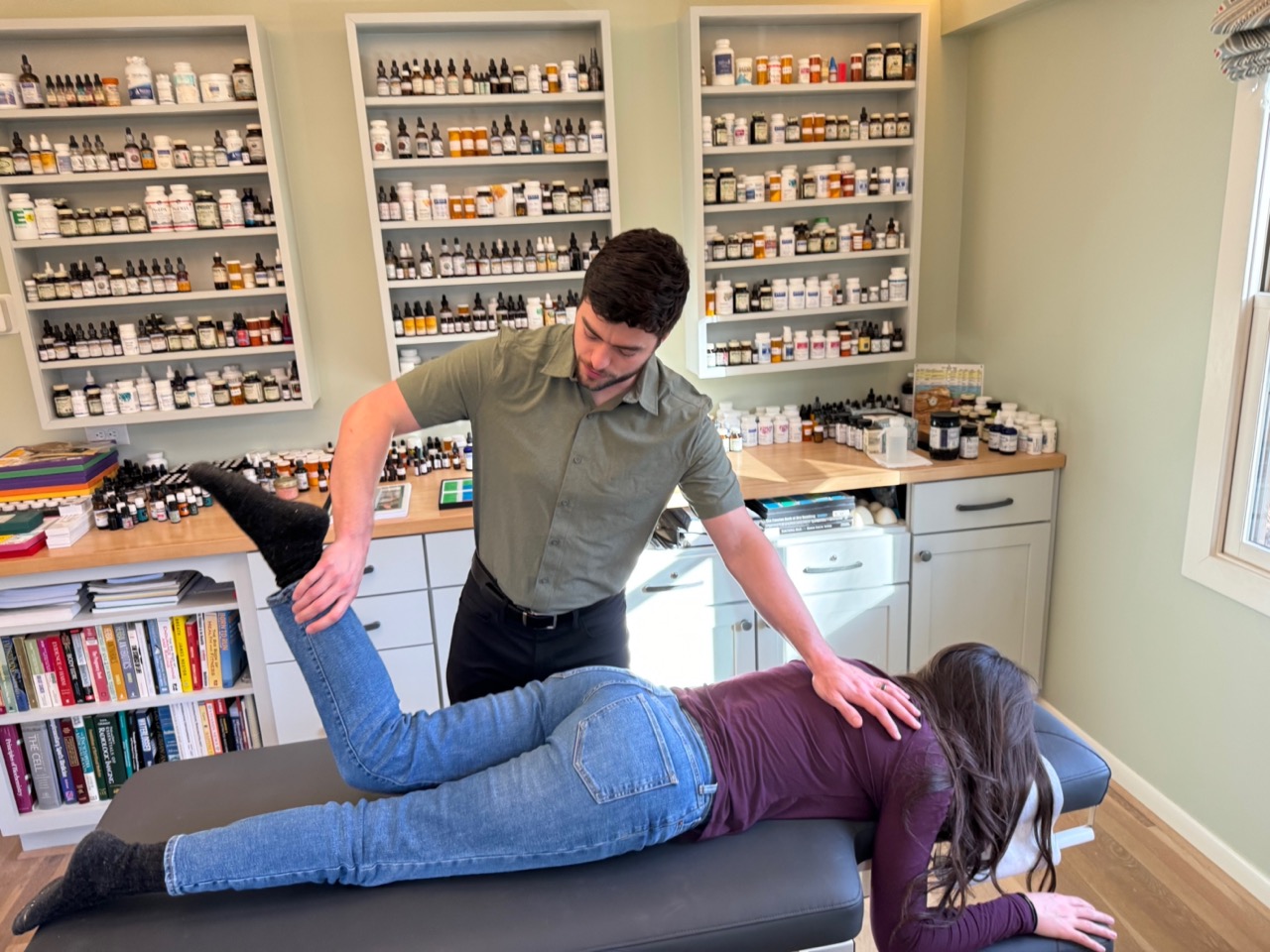
Applied Kinesiology uses a neurological type of muscle testing to assess all aspects of the triad of health to gain biofeedback from the patient about what isn’t working well in their body, and what will help to correct this. Muscle testing is not a maximum strength test as it tests your neurologic control of that muscle and your body’s ability to respond to a changing force. This gives the Applied Kinesiologist what many deem, “a window into the patient’s nervous system”. The practitioner will assess various reflexes in the body, such as acupuncture points, organ reflexes, gait response, etc… and determine what is a normal or abnormal response. This allows the doctor to determine what facilitates (strengthens) a “weak” muscle or what inhibits (weakens) a “strong” muscle. The terms weak and strong aren’t an entirely accurate way to describe the tests, but this is easier to understand without having any neurobiology knowledge. The tester then utilizes a “challenge” to find what will correct the abnormal response and thus help improve the patient’s health. Treatments could include chiropractic adjustments, cranial therapy, myofascial therapy, trigger points, acupuncture or acupressure points, nutrient supplementation, or exercise recommendations. Muscle testing is an art that takes years of practice to perfect. The science is knowing how to apply and interpret the test to determine the best treatment for the patient.
When done well, Applied Kinesiology muscle tests are a quick, non-invasive way to help narrow down what process in your body is dysfunctional and what treatment will be necessary. The muscle testing accepted by the International College of Applied Kinesiology (ICAK) are very specific tests, not an arm pull-down test you may see other muscle testers doing. This is a less accurate way of testing and may or may not deliver the same results. Applied Kinesiology is also used alongside other diagnostic tools and evaluation, such as a thorough history, physical exams, orthopedic and neurologic tests, and lab testing as necessary. This type of testing allows for a very individualized approach for every patient, as many times 2 people with the same symptoms will need 2 completely different treatment protocols.
What to Expect at Your First Visit
Your first visit starts with a thorough history and physical exam, including orthopedic and neurologic tests. From there, I use AK muscle testing to check how your body responds to different reflexes and challenges, and order lab work if it’s needed. Treatment is built around what your body shows me, and could include cranial work, myofascial work, nutritional support, dietary modifications, or exercise recommendations. Two people with the same symptoms often need completely different plans, so everything is individualized.
Who I Help
I use Applied Kinesiology with patients dealing with chronic pain, gut and digestive issues, thyroid and hormone imbalances, autoimmune conditions, and athletes or active men looking to improve performance and recovery.
Ready to find out what’s actually going on?
Applied Kinesiology: The Best Kept Secret In Healthcare
Check out this documentary to learn more about Applied Kinesiology!
Learn more about Applied Kinesiology here: ICAK-USA
Learn more about Systems Health Care here: What is Systems Health Care